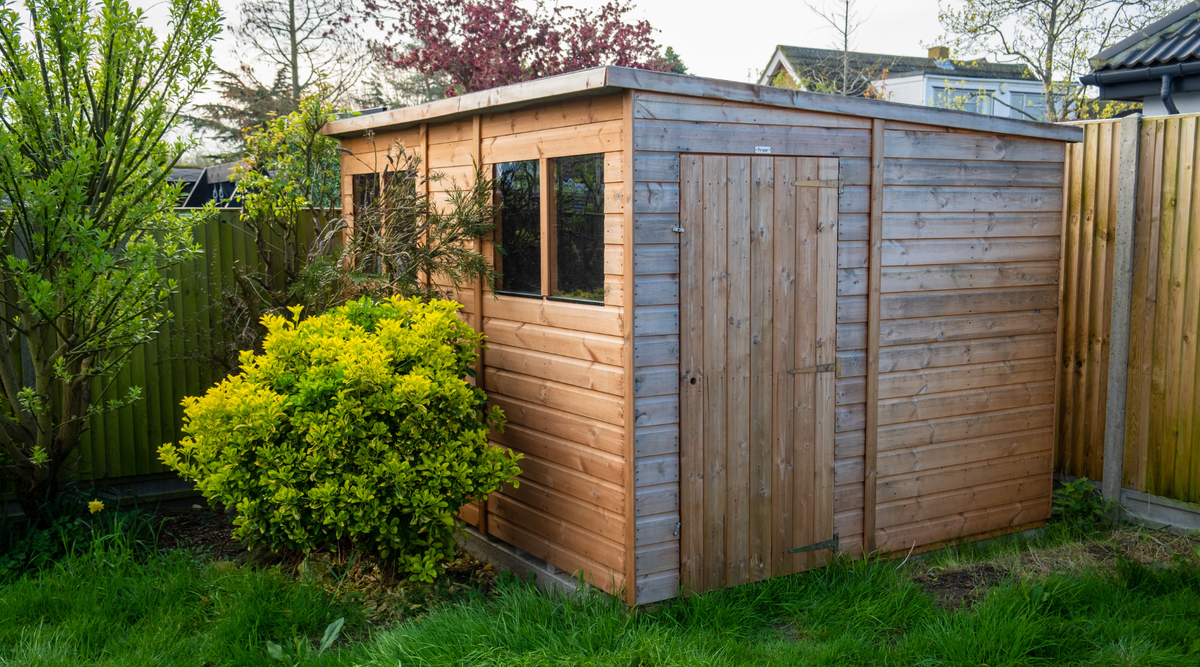

When the evenings draw in and every day on your weather app seems to come with a raincloud, it's easy to assume the painting season is over until spring. But autumn and winter are exactly when your shed, cabin and garden timber need protecting most, and you probably have more opportunities to get the job done than you think.
Your quick guide to the right conditions
You don't need a perfect week of dry weather to protect your timber. A short dry window can be enough for a small job, as long as you start in the right conditions and give the coating time to dry before the rain arrives. Here's what matters most:
-
Temperature: Apply when the air temperature is above 5°C, and never in freezing conditions or onto frozen timber
-
Moisture: Timber moisture content should be below 20%, with the surface free from rain or dew. Press dry kitchen paper firmly against the wood, especially around joints and lower boards. If it picks up moisture, wait. This only checks the surface: new or recently soaked timber can still be wet inside, so use a moisture meter if you’re unsure.
-
Rain: Allow at least two hours before rain is due and longer when it's cold or damp
-
Timing: Late morning to early afternoon is usually your best window in winter
-
Coats: Apply the next coat once the previous one is touch dry
Read on for the full detail behind each of these, plus what you can actually get done in 10 minutes.
Don’t let the forecast put you off

Weather forecasts often look worse than the weather really is. A rain symbol on every day of the week doesn't mean it will rain all day, every day. Look at the hourly forecast rather than the daily summary and you'll often find a dry stretch of a few hours, which can be all a smaller job needs.
The key is choosing a job that fits the window you have. Rather than waiting for a perfect week that may not come until spring, pick something manageable, check the actual conditions on the day and get it done.
Why Protek coatings dry so quickly
Our coatings are water based and contain a high level of good quality resin, which is what helps them dry quickly. Oil and spirit-based products, by comparison, can take days to cure.
That quick drying time is what makes a short dry spell so useful. The thing that matters most isn't a long run of dry weather after you've finished, it's starting with timber in the right condition.
What you can get done in 10 minutes
Here's a real example. A log store painted in Timber Eco Shield Black could take around 10 minutes to coat and be touch dry in around 20 minutes in favourable conditions.

Log store painted in Timber Eco Shield Black
Drying times will always vary with the type of timber and the weather on the day, so treat this as a guide rather than a guarantee. But it shows how much you can achieve between showers when you pick the right job.
Protection first: what to treat before the next heavy rain
Autumn isn't really the time for choosing a new colour scheme. It's the time to make sure your timber is protected before the next spell of heavy, driving rain.
New timber buildings are particularly worth treating promptly. If you've just put up a new shed, cabin, or summerhouse, don't leave it bare through the winter.
Existing buildings can benefit from a little extra attention where the weather hits hardest. Giving the side most exposed to wind and rain an extra coat is a simple way to boost its protection.
Leaky sheds need a different approach. If water is getting into your shed, the source of the leak needs repairing first. A coating will protect the timber but paint alone won't fix a leak.
Which product should I use?

Royal Exterior is our choice for sheds, cabins, and exposed joinery. It gives our best weather protection and is our quickest drying option.
Wood Stain & Protect with Clear Tough Coat is a good value option if you want extra weather protection.
ESP Panel Edge Seal protects the exposed edges of construction boards, such as plywood and OSB, against moisture damage, warping, and delamination (where the layers of the board start to separate).
The right conditions for painting outdoors
Temperature: above 5°C
Apply Protek coatings when the air temperature is above 5°C. That's the temperature you'd see if you checked your weather app to find out how cold it is outside. Don't paint in freezing conditions and never apply a coating to frozen timber, as it won't be able to bond properly.
Moisture: what “dry enough” really means
At this time of year, your timber is unlikely to be bone dry and the good news is it doesn't need to be. What matters is that its moisture content is below 20% before you start.
The most reliable way to check is with a moisture meter. Take readings in a few different places, especially around joints and on the lower boards, where water tends to sit. If the reading is below 20%, you're ready to go.
If you don't have a moisture meter, a simple kitchen paper test will tell you whether the surface is ready. Press a sheet of dry kitchen paper firmly against the wood, again focusing on joints and lower boards. If it picks up any moisture, give it longer. Just bear in mind this only checks the surface. New timber, or timber that's recently had a soaking, can still be wet inside even when it feels dry. If you're unsure, a moisture meter is worth having.
The problem comes when timber is saturated. By the end of a wet winter, a piece of wood can weigh double what it would when dry, because of how much water it has absorbed. A coating applied to saturated timber won't fix or bond to it properly.
Surface water is a separate issue. After rain, frost or a heavy morning dew, give the timber time to dry off before you begin.
Time before rain: Leave at least two hours
Whichever Protek product you're using, allow at least two hours between finishing and the next rain. Colder or damper conditions can slow drying down, so if you can give it longer, do.
Touch dry isn’t the same as ready for rain
These two get mixed up a lot so it's worth being clear. Touch dry means the coating is ready to handle or recoat. It doesn't mean it's ready to face the rain.
So, when you're applying a second or third coat, wait until the previous coat is dry to the touch before you go again. Then, once your final coat is on, allow at least two hours before any rain.
Best time of day: late morning to early afternoon
In winter, your best painting window is usually late morning to early afternoon. By then, the morning dew has had time to dry, and you'll finish before the temperature drops and damp settles in again later in the day.
Water out, not water in: how our coatings protect your timber

All our coatings are wax enriched, which makes them highly water repellent. They're also microporous, and this is where it gets clever.
A microporous coating stops rain getting into the timber, but it still lets water vapour out. So, if your timber is a little damp underneath, that moisture can evaporate out through the coating rather than being trapped. It's this breathability that makes our coatings crack and peel resistant.
Raining today? Paint the inside of your shed instead
If the rain has set in for the day, you don't have to down tools completely. Painting the inside of a dry shed is a great alternative and it means you're still making progress while you wait for a better window of weather outside. You don't need a separate product for the job either: the same coatings you'd use outside, such as Royal Exterior, are suitable for the inside of your shed too.
Frequently asked questions
What’s the lowest temperature you can paint outside?
For Protek coatings, apply when the air temperature is above 5°C. Don't paint in freezing conditions or onto frozen timber.
How long does paint need to dry before it rains?
Allow at least two hours before rain and longer if it's cold or damp.
Can you paint wood when it's damp?
Timber doesn't need to be bone dry, but its moisture content should be below 20%. Don't apply to saturated or frozen wood, and let surface water from rain, frost, or dew dry off first.
Can you paint a shed in winter?
Yes. Choose a dry window, make sure the air temperature is above 5°C, check the timber isn't saturated or frozen and allow at least two hours before rain. Late morning to early afternoon is usually the best time.
What does touch dry mean?
Touch dry means the coating is ready to handle or to take another coat. It isn't the same as being ready for rain.
Not sure where to start?
Our timber coating specialists are here Monday to Friday with advice on choosing the right product and getting the best results, whatever the weather is doing.
You can speak to the team Mon-Fri, 9am to 4:30pm on 01749 344 697, email us at Enquiries@ProtekProducts.co.uk or complete our contact form.